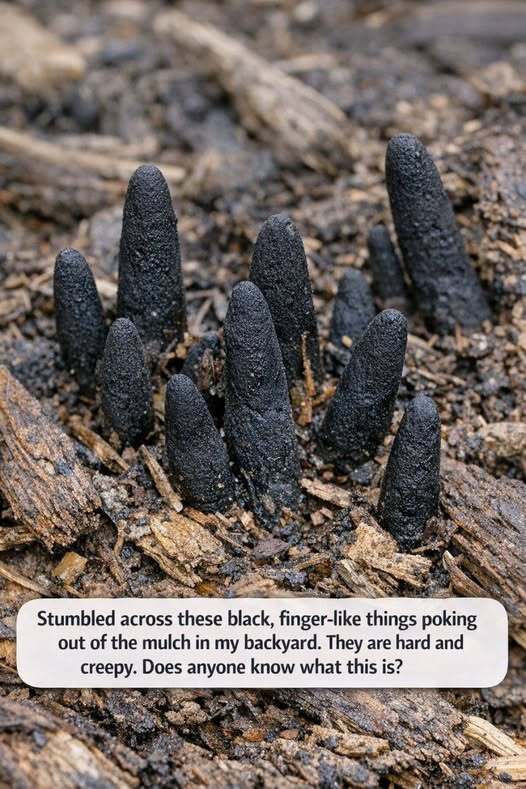
Despite their eerie appearance, Dead Man’s Fingers are not harmful to humans, pets, or living plants. They are inedible due to their tough, woody texture and unappealing taste, but handling them poses no risk. For gardeners, it is important to note that they do not parasitize living plants and primarily consume dead wood, making them a benign and even beneficial component of garden ecosystems. Nevertheless, their unusual shape often gives rise to myths and misidentification. They are sometimes confused with Stinkhorn fungi, which have similar elongated forms but differ in color, texture, and odor. Other mistaken identities include decaying plant roots or wood that may appear blackened and finger-like but lack distinct fungal structures or spore-producing features. Understanding these differences is crucial for accurate identification and for reducing unnecessary concern. For many, the initial shock of encountering Dead Man’s Fingers fades once their ecological function and harmlessness are understood, transforming an unsettling discovery into a fascinating example of nature’s ingenuity.
Management and Safe Removal of Dead Man’s Fingers
While these fungi are harmless, homeowners may wish to manage their appearance for aesthetic reasons or to prevent regrowth in highly visible areas. Removal is straightforward but should be done carefully. Wearing gloves to protect your hands, gently pull the fruiting bodies from the soil, ensuring that any underlying decaying wood is also removed. Disposing of the fungi in compost or yard waste is sufficient, though care should be taken not to introduce them into natural areas where they might encourage unwanted fungal proliferation. Preventing future growth largely involves reducing the availability of decomposing wood in garden beds. Regularly turning or refreshing mulch, improving drainage, and increasing sunlight exposure in shaded areas can discourage fungal development. Alternatively, homeowners may opt for mulch types that break down more slowly, such as pine needles, gravel, or stone, which provide a similar aesthetic without creating ideal fungal habitats. These practices allow homeowners to maintain garden appearance while respecting the natural decomposition processes that fungi support.
Turning Backyard Discoveries into Curiosity and Learning
Encountering Dead Man’s Fingers in your yard offers an opportunity to cultivate curiosity about fungi and the hidden processes of your garden ecosystem. Mycology, the study of fungi, reveals the remarkable complexity and importance of these organisms, from nutrient cycling to forming symbiotic relationships with plants. Observing these fungi firsthand can deepen appreciation for the interactions taking place beneath the soil, fostering an awareness of ecological balance and sustainability. For homeowners eager to learn more, local mycology clubs, extension services, or online communities provide guidance on identification, lifecycle observation, and the broader roles of fungi. Embracing these discoveries can transform an initially creepy experience into an educational journey, encouraging exploration of biodiversity and the intricate, largely unseen networks that support healthy gardens. By approaching such findings with curiosity rather than fear, gardeners can gain insight into ecosystem dynamics, recognize the value of decomposition, and even spark interest in the fascinating field of fungi biology.
For Complete Cooking STEPS Please Head On Over To Next Page Or Open button (>) and don’t forget to SHARE with your Facebook friends.