Unsettling Discoveries: When Black, Finger-Like Growths Appear in Your Yard
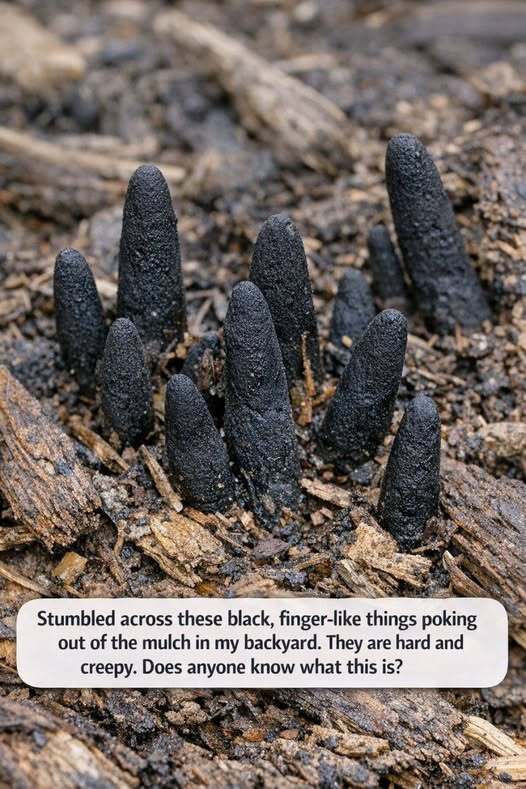
Discovering something unusual in your backyard can evoke a mix of curiosity and unease, particularly when it involves strange, unexpected growths emerging from soil or mulch. Many homeowners have been startled to find black, finger-like protrusions sprouting from the ground, appearing almost skeletal in shape. At first glance, these unusual formations can provoke worry—are they dangerous, invasive, or signs of decay that could harm your garden? The truth is often far less alarming than it appears. These structures are frequently a type of fungus known as Dead Man’s Fingers, scientifically named Xylaria polymorpha. Despite their ominous name and eerie appearance, they are largely harmless and play a beneficial role in decomposing dead wood and recycling nutrients into the soil. Understanding the biology, habits, and ecological significance of these fungi can transform initial fear into fascination, offering insight into the hidden networks of life beneath your feet. For homeowners encountering them for the first time, it is worth exploring what these fungi are, why they appear, and how to manage or appreciate them without alarm.
Characteristics and Identification of Dead Man’s Fingers
Dead Man’s Fingers are easily recognizable once their unique characteristics are understood. Mature fruiting bodies are typically black or dark brown and take on an elongated, finger-like shape that can reach three to four inches in height. Initially, they may appear pale or whitish, gradually darkening and hardening into a rigid, woody texture as they mature. This transformation—from soft, malleable forms to tough, blackened structures—adds to their unsettling, almost skeletal appearance, which has inspired their evocative name. The fungi often grow in clusters, resembling a hand with multiple fingers reaching from the soil, stumps, or buried wood. They are commonly found in gardens, especially in areas rich in decomposing wood chips or mulch, though they are also native to deciduous forests where they play an essential role in breaking down cellulose and lignin. Identification relies on several key features: elongated, blackened structures with a smooth exterior, a white interior when cut open, and growth emerging from decaying wood. While they are occasionally confused with Stinkhorn fungi, roots, or decaying plant matter, Dead Man’s Fingers can be distinguished by their distinct form and spore-producing characteristics. Homeowners uncertain about identification can consult mycologists or local extension offices to confirm their observations.
Ecology and Causes of Growth in Mulch and Gardens
Dead Man’s Fingers thrive in environments rich in decomposing wood, which explains their frequent appearance in mulched garden beds, wooded areas, and places with buried stumps or branches. As saprobic fungi, they feed exclusively on dead organic material, playing a critical role in nutrient cycling. By breaking down cellulose and lignin, they release nutrients back into the soil, enhancing fertility and supporting surrounding plant life. Moisture, shade, and temperature also influence their development. Damp, shaded areas with minimal sunlight provide ideal conditions for fungal growth, while seasonal changes—particularly in spring and fall—can trigger fruiting as temperature and humidity reach favorable levels. Because they target dead matter, their presence indicates a healthy decomposition process rather than a threat to live plants. Understanding the ecological function of Dead Man’s Fingers can help homeowners appreciate their role in maintaining soil health and garden vitality. Their appearance may signal that mulch needs refreshing or that buried wood is decaying, which can be managed to balance aesthetics with natural processes.
Are Dead Man’s Fingers Dangerous? Myths and Misconceptions
For Complete Cooking STEPS Please Head On Over To Next Page Or Open button (>) and don’t forget to SHARE with your Facebook friends.