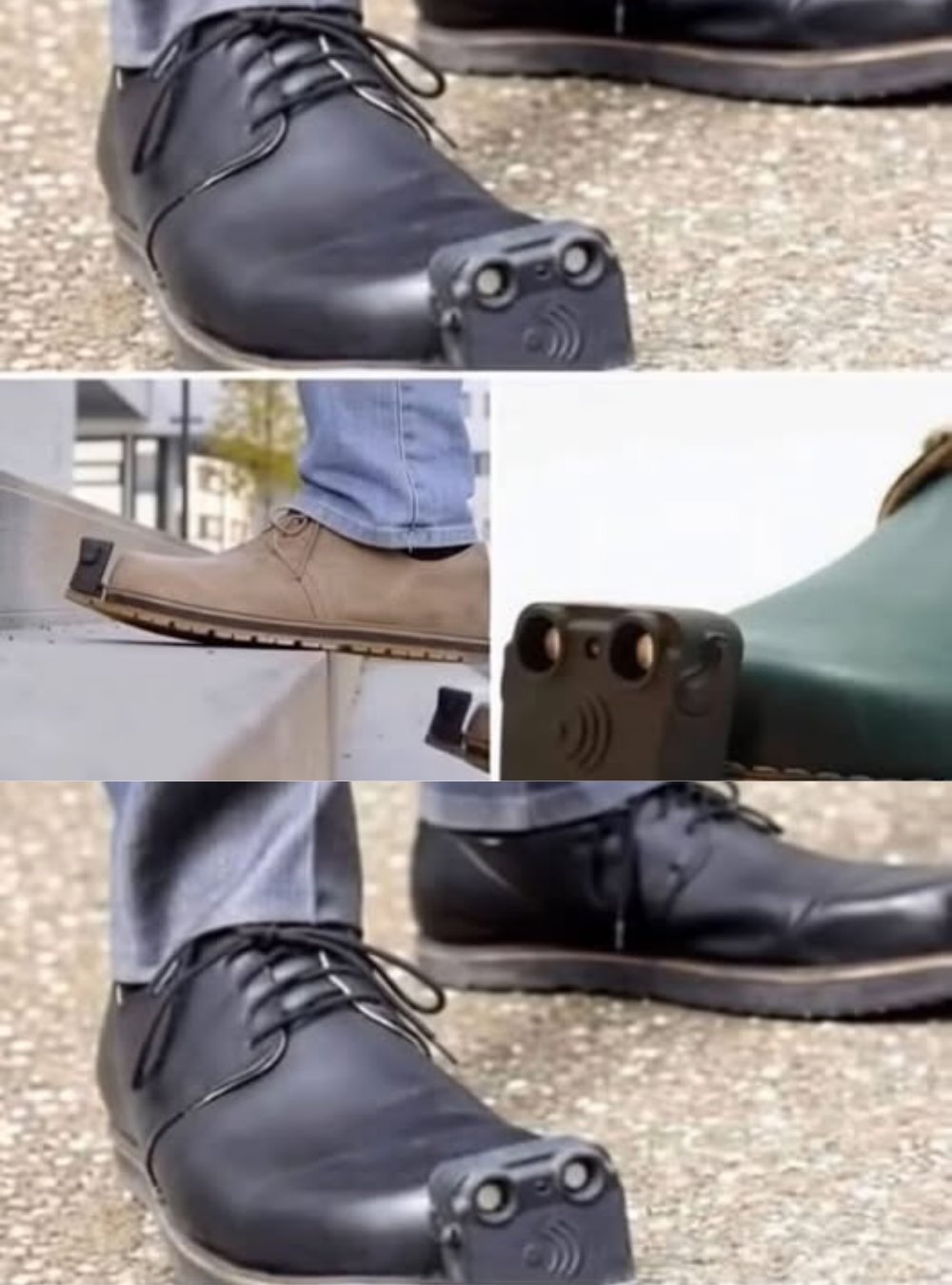
Many describe the system as a “parking sensor for humans.” It doesn’t replace a white cane or guide dog, but it adds an extra layer of awareness—especially for obstacles at chest or head height that traditional aids may miss.
The idea was developed in Austria by Tec-Innovation in collaboration with Graz University of Technology, and it was co-created by Markus Raffer, who is visually impaired himself. His lived experience shaped the design, ensuring the technology is practical, discreet, and respectful.
The sensor can be built directly into the shoe or attached to existing footwear. It’s waterproof, lightweight, and designed for everyday use. Newer versions are exploring AI and camera-based mapping to provide even more detailed environmental awareness.
So if you ever notice someone wearing these shoes, it doesn’t mean danger is nearby—it means someone is using smart technology to navigate the world with confidence.
They’re more than shoes.
They’re a quiet symbol of independence, inclusion, and how thoughtful innovation can change lives—one step at a time.